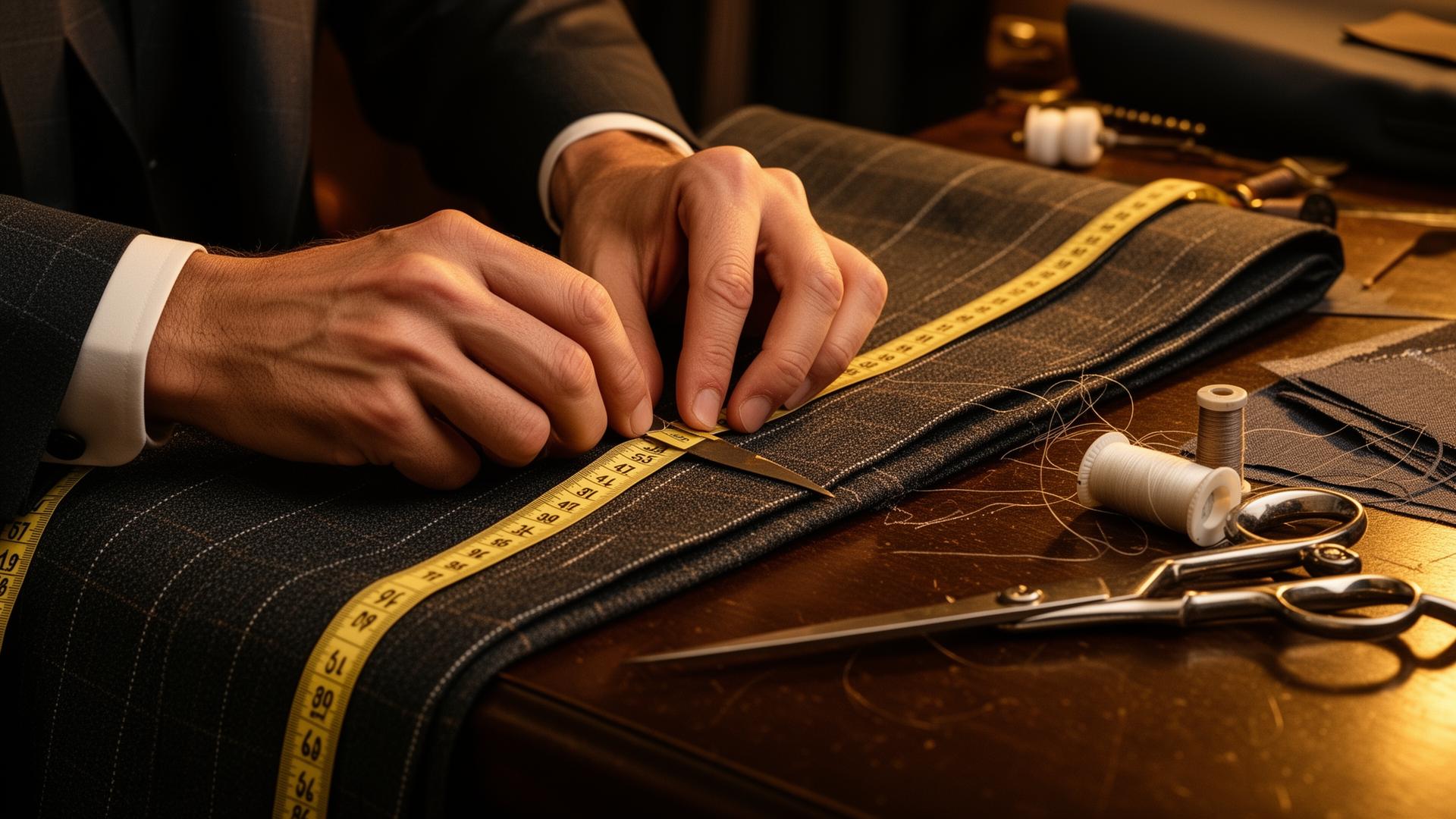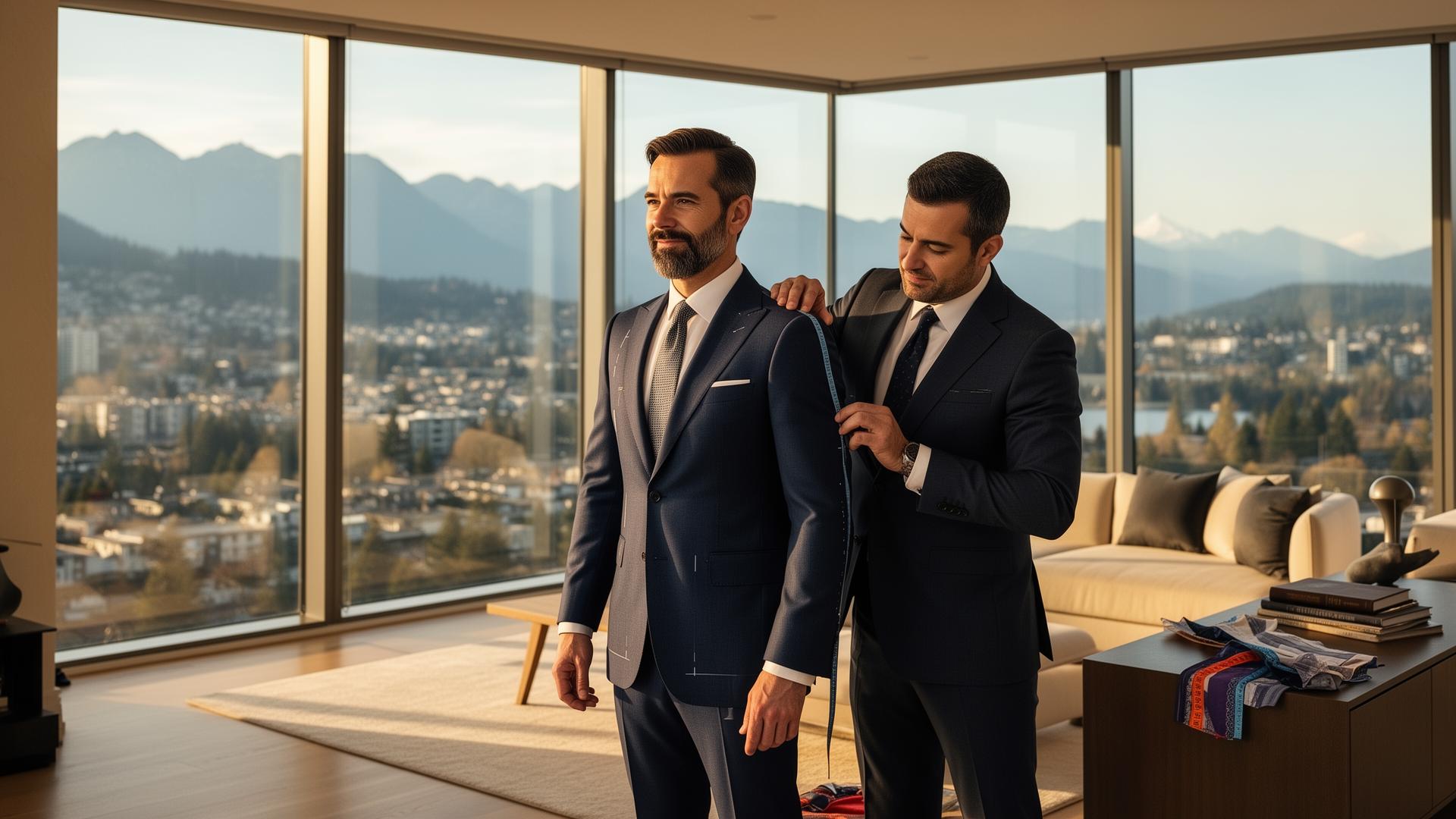
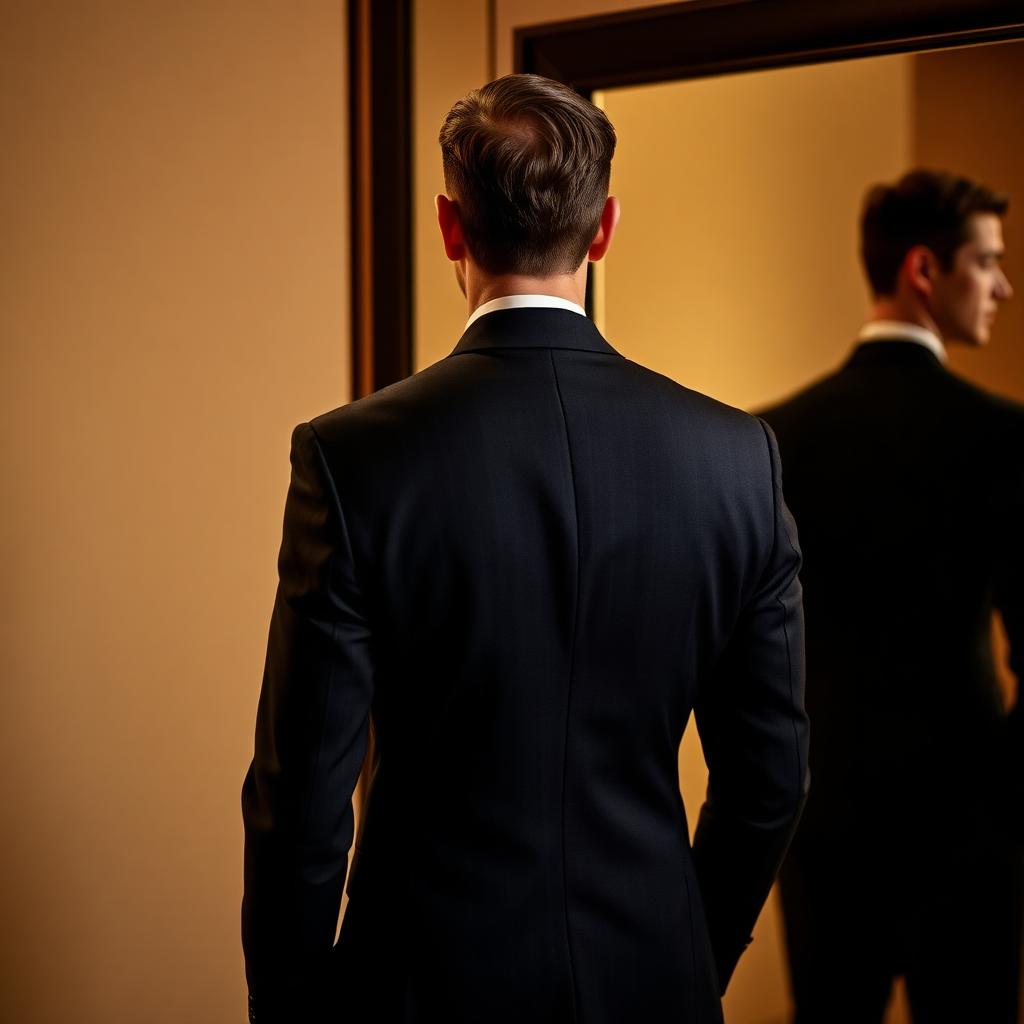
A well-fitting suit should sit cleanly when you’re standing and give you room to sit and move. Start with the shoulders and collar before you worry about trouser hems. Those smaller finishing details won’t make up for a jacket that doesn’t sit properly.
I’m Rajat Nagpal, owner of Suited Booted & Co. We’re based in Langley and come to your home or office for custom tailoring. These are the checks I’d ask you to make at a fitting, with the shirt and shoes you plan to wear.
1. Shoulder line
Look at where the jacket shoulder ends in relation to your own shoulder. You want a clean line into the sleeve, without the fabric collapsing over the edge or pulling across your upper arm. The exact shape depends on the jacket’s construction, so don’t judge by the seam alone.
Get the shoulders right early. Shoulder alterations are involved, and you shouldn’t assume a poor fit here will be a simple fix later.
2. Collar
With your arms relaxed, the jacket collar should sit against your shirt collar rather than stand away from your neck. Check the back as well as the sides.
A gap deserves a closer look, but it doesn’t tell you the cause on its own. Your posture and the way the jacket sits across your shoulders both matter. Don’t straighten yourself into an unfamiliar pose just to make the collar behave.
3. Chest
Fasten the usual closing button and look at the lapels. They should lie against your chest without bowing out. Watch for strong pulling lines around the button, too.
You should have breathing room inside the jacket. Sliding a flat hand inside can be a useful starting check, but don’t treat it as a pass-or-fail measurement. Look at the fabric and notice how the jacket feels when you breathe normally.
4. Sleeve pitch
Sleeve pitch means the angle at which the sleeve hangs. Let your arms fall naturally and look for twisting or persistent diagonal wrinkles.
Your arms don’t necessarily hang straight down at your sides. A sleeve needs to work with your resting position. If it only looks clean when you hold your arms unnaturally, bring that up at the fitting.
5. Sleeve length
A small amount of shirt cuff showing below the jacket sleeve is a useful starting point. Check that your shirt sleeve fits first; a shirt cuff slipping over your hand will give you the wrong reference.
Compare both sides with your arms relaxed. You’ll get a better reading that way than by stretching your hands down or bending your elbows in front of the mirror.
6. Jacket length
For a conventional business or wedding suit, covering the seat is a sensible starting point. Then look at the balance between your torso and legs.
The old thumb-knuckle check can help, but arm length varies. I wouldn’t use it as the deciding rule. Ask to see the jacket from the side and back as well as the front before choosing a shorter cut.
7. Trouser waist
Your trousers should stay at the intended height without a belt being pulled tight to hold them there. That height depends on the trouser rise and what feels comfortable on you; it doesn’t have to be at your navel.
Sit down before approving the waist. A waistband can feel fine standing up and dig in once you’re seated.
8. Trouser seat and thigh
Check for pulling across the seat, pockets that gape and excess fabric hanging beneath the seat. You want enough room through the thigh to sit and walk without the cloth gripping your legs.
Some creasing during movement is normal. Focus on tension that stays there when you’re standing naturally, rather than trying to remove every wrinkle from a moving body.
9. Trouser break
The break is the fold where your trouser hem meets your shoe. A slight break works for a conventional finish; no break gives a shorter line. Neither choice tells you, by itself, how well the suit fits.
Wear your intended shoes when checking the hem. The trouser width and shoe shape affect how the fabric falls. Avoid fabric piling up over the shoe, and keep the hem clear of the ground, particularly on wet Vancouver days.
10. The movement test
Sit, walk and reach forward as you normally would. Notice pressure across your back, at the waistband or through your thighs.
A tailored jacket will move when you raise your arms. Expecting it to stay perfectly still isn’t realistic. What matters is comfortable everyday movement and how the suit settles when you return to a relaxed stance.
Planning your fitting
Our two-piece suits start at $697 CAD before tax. Delivery is 3 to 4 weeks from measurement; for weddings and groups, book 8 to 12 weeks before the date. All sales are final, so raise fit questions and confirm your choices before ordering.
We don’t have a showroom. We visit homes and offices across Metro Vancouver and the Fraser Valley, with no travel fee anywhere in Metro Vancouver, including the North Shore.
Related reading
You can book a free consultation or arrange a private consultation at your home or office.