
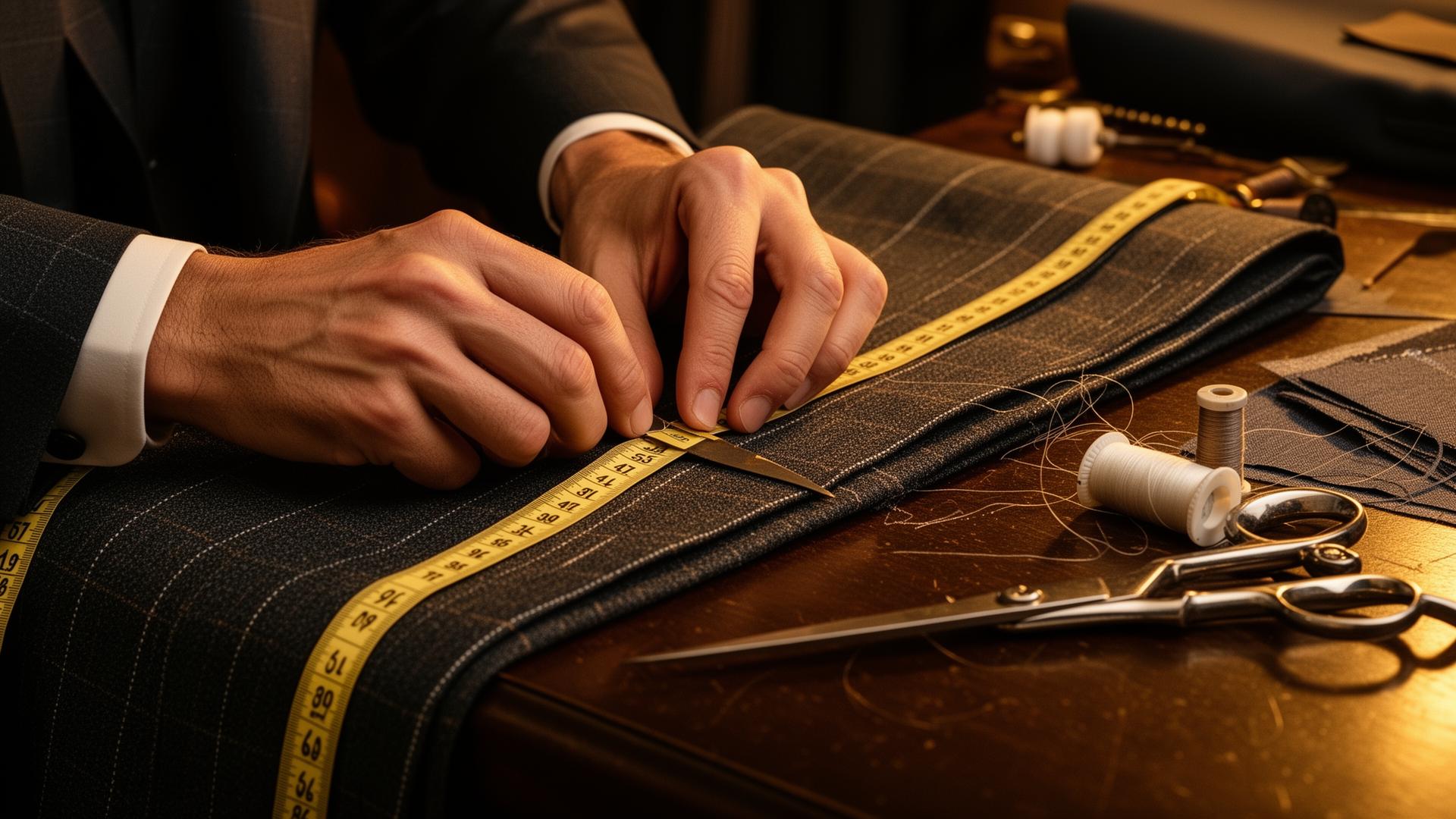
The menswear industry uses terms like "custom suits," "bespoke," and "made-to-measure" almost interchangeably — but they describe very different products. Understanding the distinction helps you make an informed investment in your wardrobe.
Off-the-Rack: The Starting Point
Off-the-rack suits are pre-made in standard sizes. They're designed using averaged measurements, which means they're a compromise by definition. While alterations can improve the fit, they can't change the fundamental structure of the garment.
Pros: Immediately available, lower price point.
Cons: Generic fit, limited fabric choices, fused construction that deteriorates over time.
Made-to-Measure: The Middle Ground
Made-to-measure (MTM) suits start with a pre-existing pattern that's adjusted based on your measurements. It's a step up from off-the-rack, but the modifications are limited — typically just length adjustments and minor tweaks.
Pros: Better fit than off-the-rack, more fabric options.
Cons: Still based on a standard template, limited structural customization.
Bespoke: The Gold Standard
True bespoke tailoring creates a pattern from scratch, unique to your body. Every measurement, every curve, every preference is accounted for. The garment is built in stages with multiple fittings to ensure perfection.
Pros: Perfect fit, unlimited customization, bespoke construction, premium fabrics.
Cons: Higher investment, longer timeline.
The Construction Difference
Perhaps the most important distinction is construction method:
- Fused (off-the-rack) — The interlining is glued to the outer fabric. Quick to produce but eventually bubbles and separates.
- Structured (MTM) — Interlining is stitched in the chest area only. A compromise.
- Bespoke (bespoke) — The entire front panel is hand-stitched with natural interlining. It molds to your body over time and lasts decades.
The Fit Difference, Honestly
A well-executed made-to-measure suit can fit very well on a relatively standard build because the base pattern is adjusted at the chest, waist, sleeve and trouser. Bespoke becomes more valuable when posture and balance matter: sloping or uneven shoulders, a forward stance, an athletic seat, prominent shoulder blades or different arm positions all influence how cloth hangs.
The difference is the fitting process. Made-to-measure usually relies on measurements applied to an existing block. Bespoke begins with a pattern drafted for the individual, then uses basted and forward fittings to read the garment on the body before it is finished. Those fittings reveal balance issues that a tape measure alone cannot.
Pattern, Fittings and Best Use Compared
| Option | Pattern | Typical fittings | Best for |
|---|---|---|---|
| Off-the-rack | Standard ready-made size | Alterations after purchase | Immediate needs and occasional wear |
| Made-to-measure | Existing block adjusted to measurements | Usually one fitting | Standard builds and a versatile working rotation |
| Bespoke | Individual pattern drafted for the wearer | Multiple fittings as required | Posture correction, defining occasions and exact personal preferences |
Which Should You Choose?
If you rely on business suits for client meetings, court appearances, or board presentations, bespoke is an investment that pays for itself. A single well-made suit that fits perfectly will outperform three off-the-rack suits that almost fit.
At Suited Booted & Co., we specialize in bespoke suits using fabrics from Guabello, Scabal, Reda, Nobility, Fox Brothers, Standeven, Holland & Sherry, Fratelli Tallia di Delfino and Dormeuil. Every suit is built from your unique pattern, with mobile fittings at your convenience across the Lower Mainland.